Open Science
Commitment to research transparency and open science
When I say open science, I mean it literally: if you make your analysis code and data public — everything behind your research, not just the results — I trust you, and I trust the way you do science.
As a researcher living through a period of growing distrust in scientific practices, I believe that sharing data, code, and methods openly is what allows our findings to be checked, reused, and built upon by others. It is also a way of giving back to society what we receive through funding agencies.
Activities
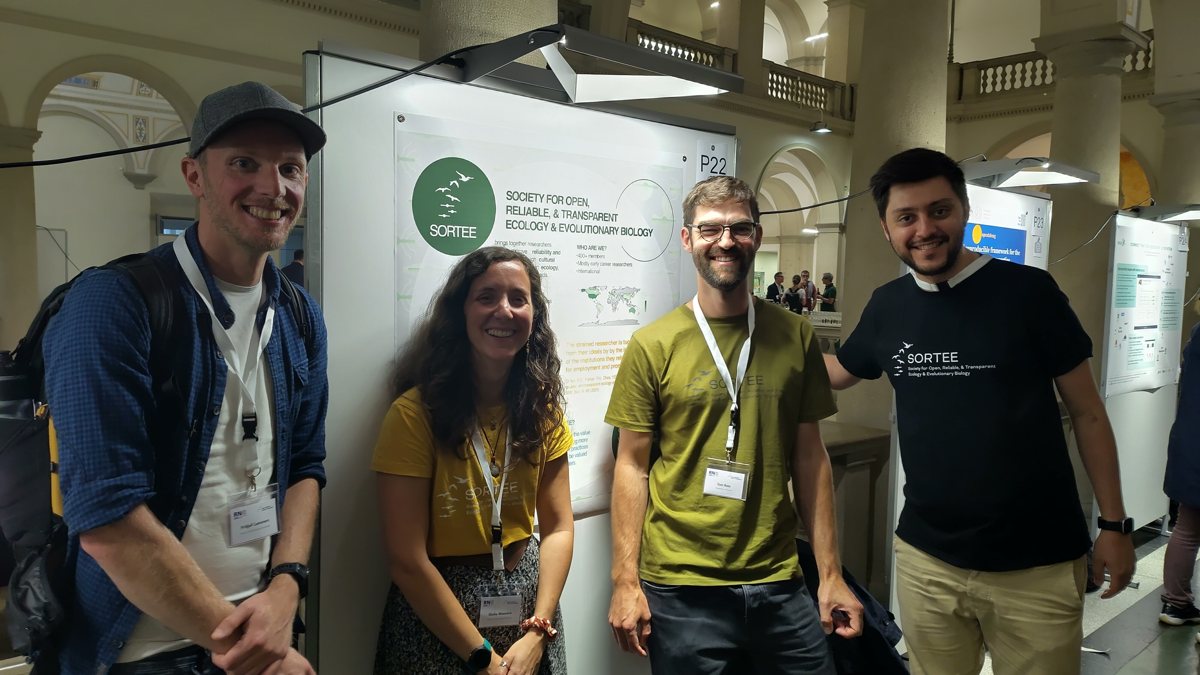
- Since 2021 — Voluntary member of the Society for Open, Reliable, and Transparent Ecology and Evolutionary Biology (SORTEE).
Active member of the working group on Research Assessment and Incentives of the Swiss Reproducibility Network, SwissRN.
Member of the Swiss Data Stewardship Network, the network of data stewards across the four Swiss research institutes of the ETH domain.
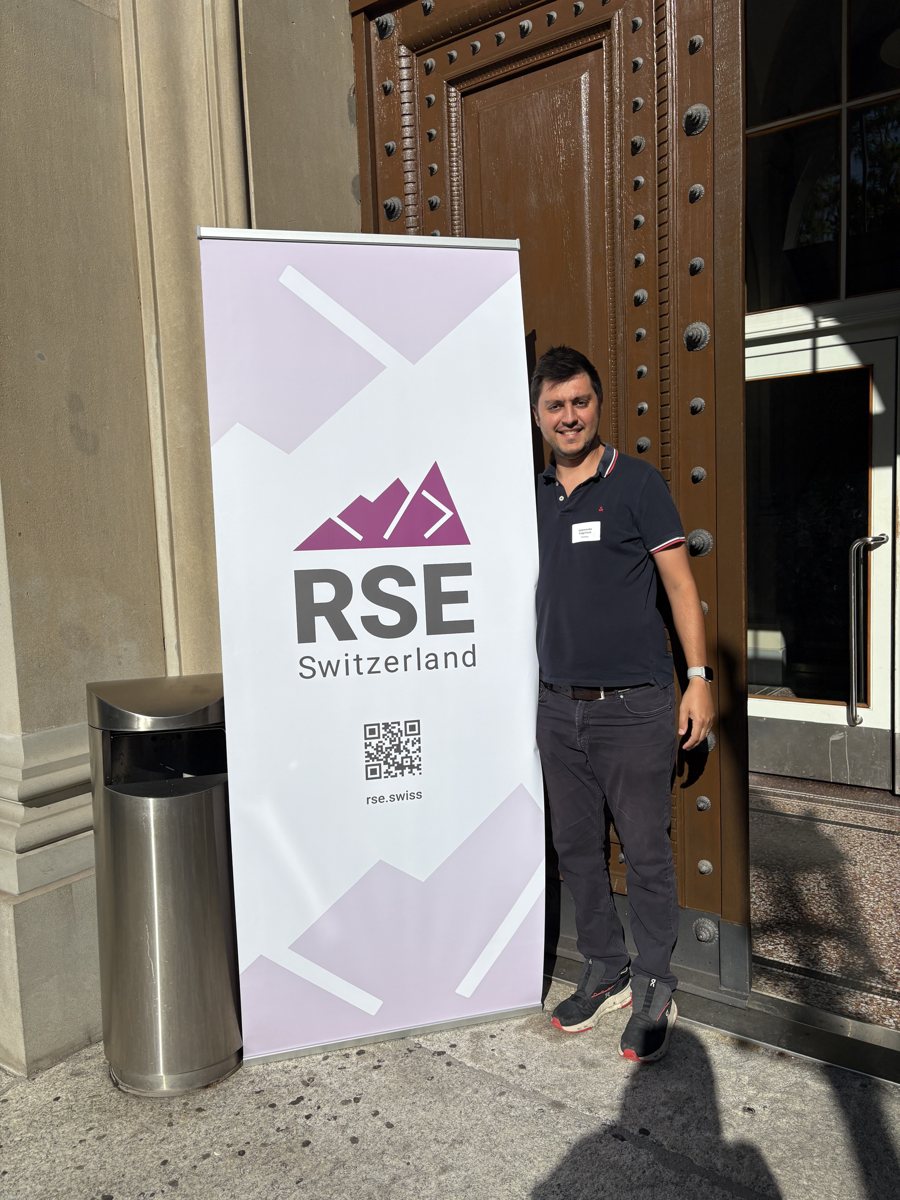
Active member of the Research Software Engineering (RSE) community of Switzerland. I attended the Swiss RSE Annual Conference 2026 at ETH Zürich (31 August 2026), which brings together RSEs from academia, research, and industry.
Member of the Ecological Forecasting Initiative, an international community of practice around making and using ecological forecasts.
Webinar host (SORTEE) — I hosted the SORTEE webinar “Lotteries and innovations in research funding allocation”, given by Dr. Rachel Heyard (Centre for Reproducible Science and Research Synthesis, Zurich, Switzerland). The recording is openly available on YouTube.
My Ph.D. thesis defense is openly available as a recorded seminar on YouTube — the full argument, questions, and discussion, not just the published papers.
Open code and data behind my papers
I don’t just endorse open science — I practise it. For my published work, the analysis code and, wherever licensing allows, the underlying data are public on GitHub, so anyone can inspect, rerun, and build on exactly what produced the results:
- Capitani et al. 2022, Ocean warming will reduce standing biomass in a tropical western Atlantic reef ecosystem (Ecosystems) — food-web model and code:
Atoll_Rocas_project. - Capitani et al. 2021, Resource-to-consumer ratio determines the functional response of an herbivorous fish in a field experiment (Oikos) — data and functional-response analysis:
FR_herbivore_fish. - Artana et al. 2025, Food web trophic control modulates tropical Atlantic reef ecosystems response to marine heat wave intensity and duration (Journal of Animal Ecology) — raw data and code:
MHW_trophic_interactions. - Schenone et al. 2025, Microbial plankton uptake enhances the degradation of a biodegradable microplastic (Environmental Pollution) — code and data archived on Zenodo.
I also release the methods I develop, not only the paper-specific pipelines — for example NLA, a Gaussian-Process / Empirical Dynamic Modelling toolkit, and the reproducible notebooks on this site. Ongoing work, such as the Lake Constance plankton analyses (see_plankton_change), is developed in the open from the start. The full list is on my GitHub profile.
Transparency about AI assistance
I use AI tools such as Claude in parts of my coding and writing workflow, and I believe openness about how research is produced now has to include openness about AI use. I follow the framework Lars Schöbitz sets out in Who wrote this? Scientific integrity at ETH Zurich in the age of AI: rather than treating AI disclosure as an afterthought, I make it a byproduct of how I already work —
- Version control with Git/GitHub, so every project keeps a complete, inspectable history of who (or what) changed what.
- Detailed commit messages that document each change and its source, human- or AI-assisted.
- Quarto notebooks (this entire website included) that keep analysis, code, and prose reproducible and traceable.
Together these leave an auditable trail of my research process, which is exactly the point: open science should make it possible to see not only what I found, but how I got there.