Amazonian river food webs, deforestation and small-scale fisheries
2015–2017
This was my Master’s research project in Ecology at the Universidade Federal do Rio Grande do Sul (UFRGS), Brazil, carried out at the Laboratório de Ecologia Humana e Etnoecologia (LEHPE) under the supervision of Prof. Dr. Renato A. M. Silvano and Prof. Dr. Ronaldo Angelini.
Project description
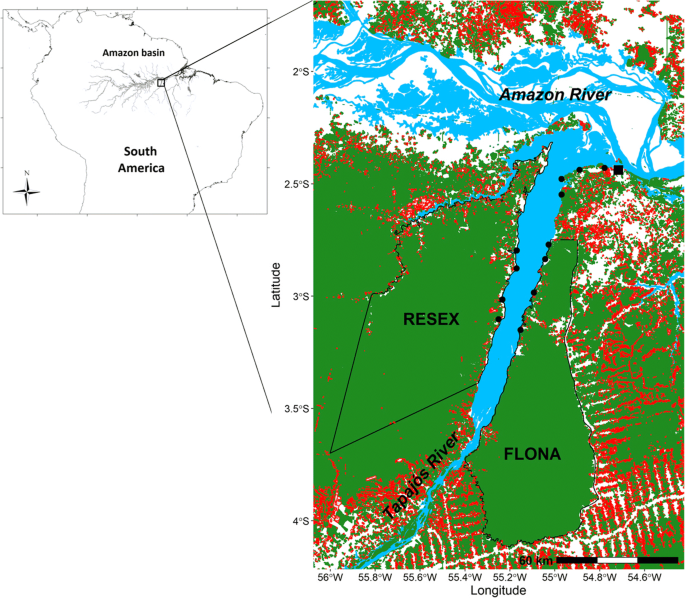
Large Amazonian rivers sustain some of the most productive inland small-scale fisheries in the world, but they are increasingly pressured by deforestation of their catchments and by rising fishing effort. My Master’s project used ecosystem food-web modeling (Ecopath with Ecosim) of the Tapajós River, combining fishers’ ecological knowledge and field data, to anticipate how these two drivers may reshape the river’s food web and the fisheries that depend on it.
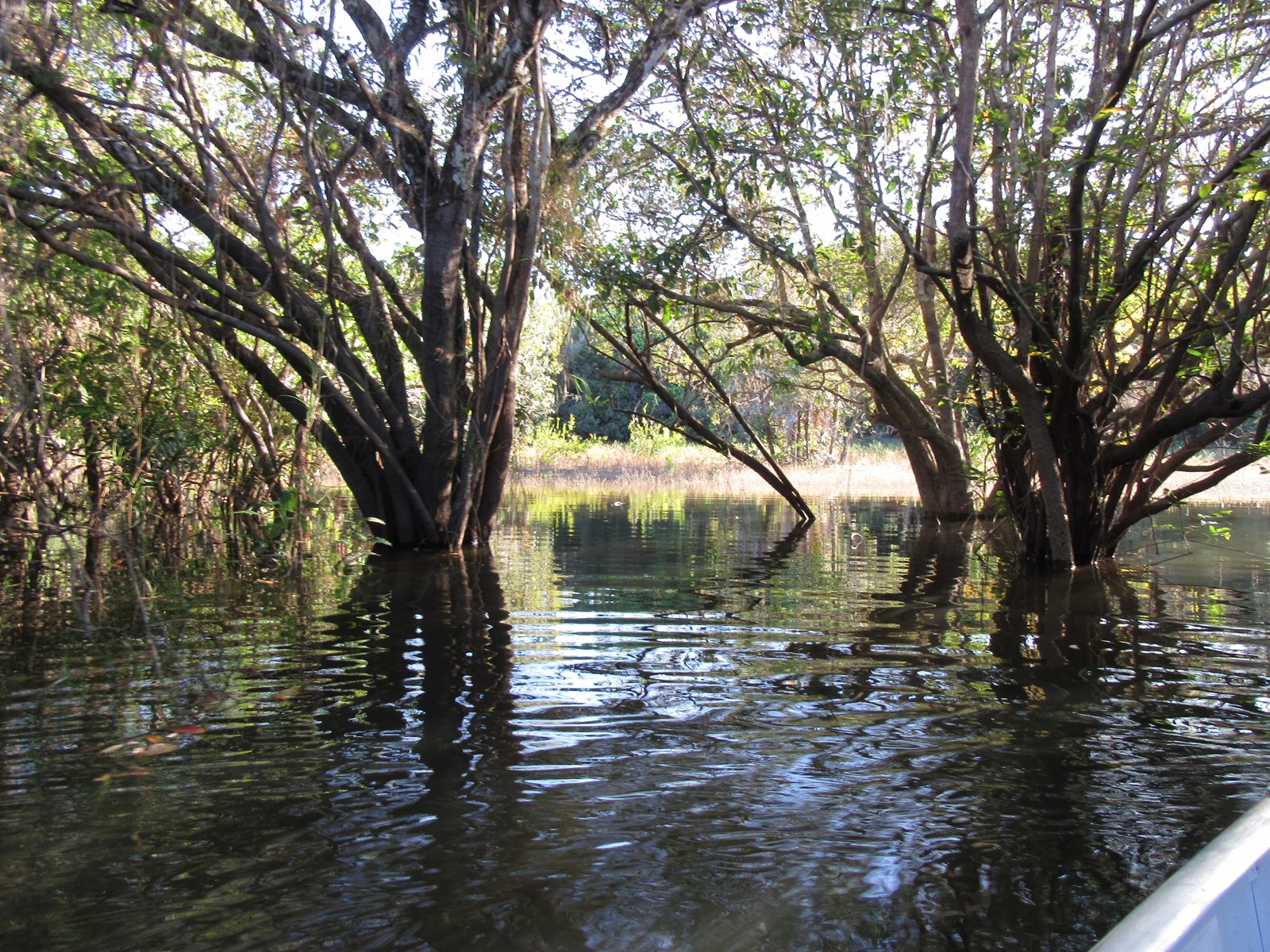
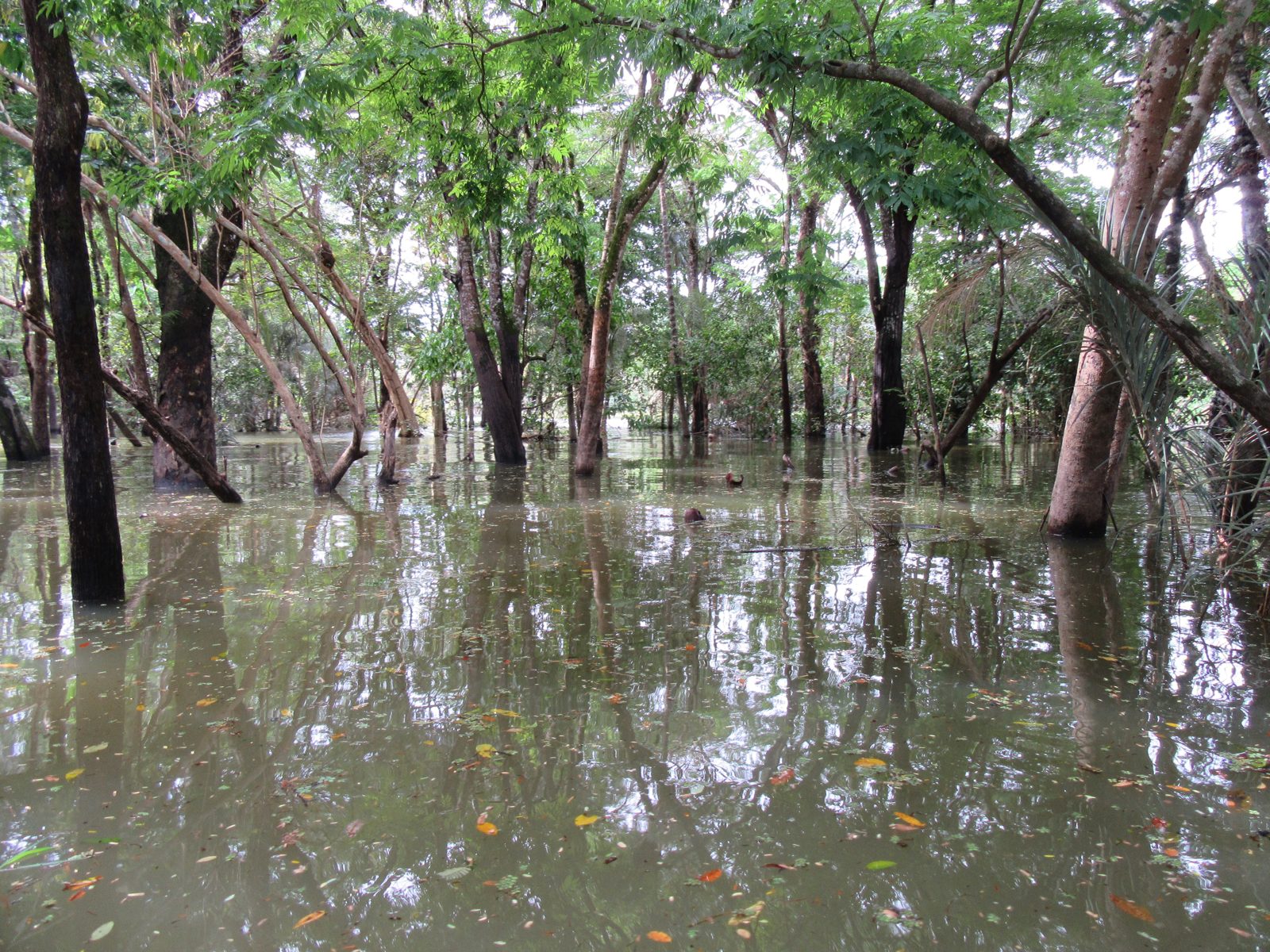
Much of the fieldwork happens in the várzea, the seasonally flooded forest along the river. When the water rises, fish move into the trees to feed — which is precisely why a food web here cannot be understood from the open channel alone.
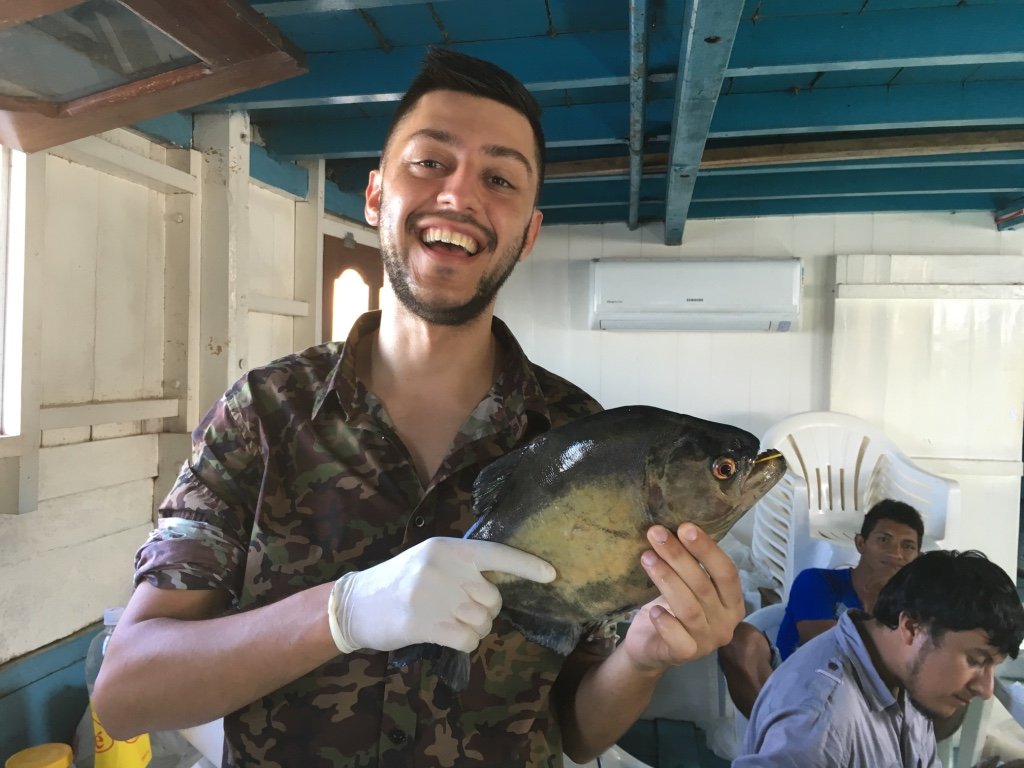
Building the food web starts with knowing who is in it, so a large part of the fieldwork is simply registering the ichthyofauna of the river — identifying, measuring and recording the species that the fisheries and the web are built on.
This work was a sub-project of the international project “Linking sustainability of small-scale fisheries, fishers’ knowledge, conservation and co-management of biodiversity in large rivers of the Brazilian Amazon” (PEER — Partnerships for Enhanced Engagement in Research).
The expedition
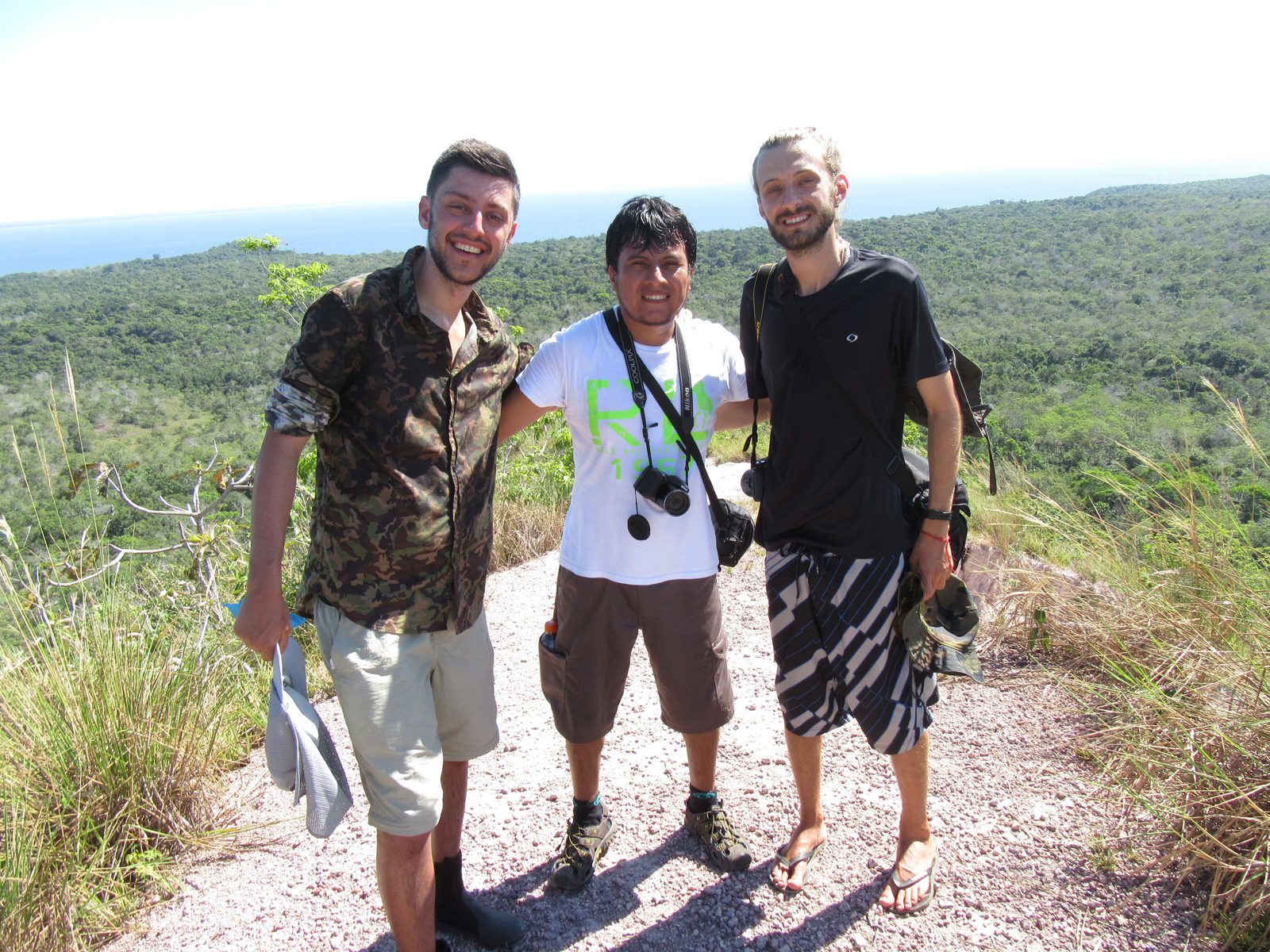
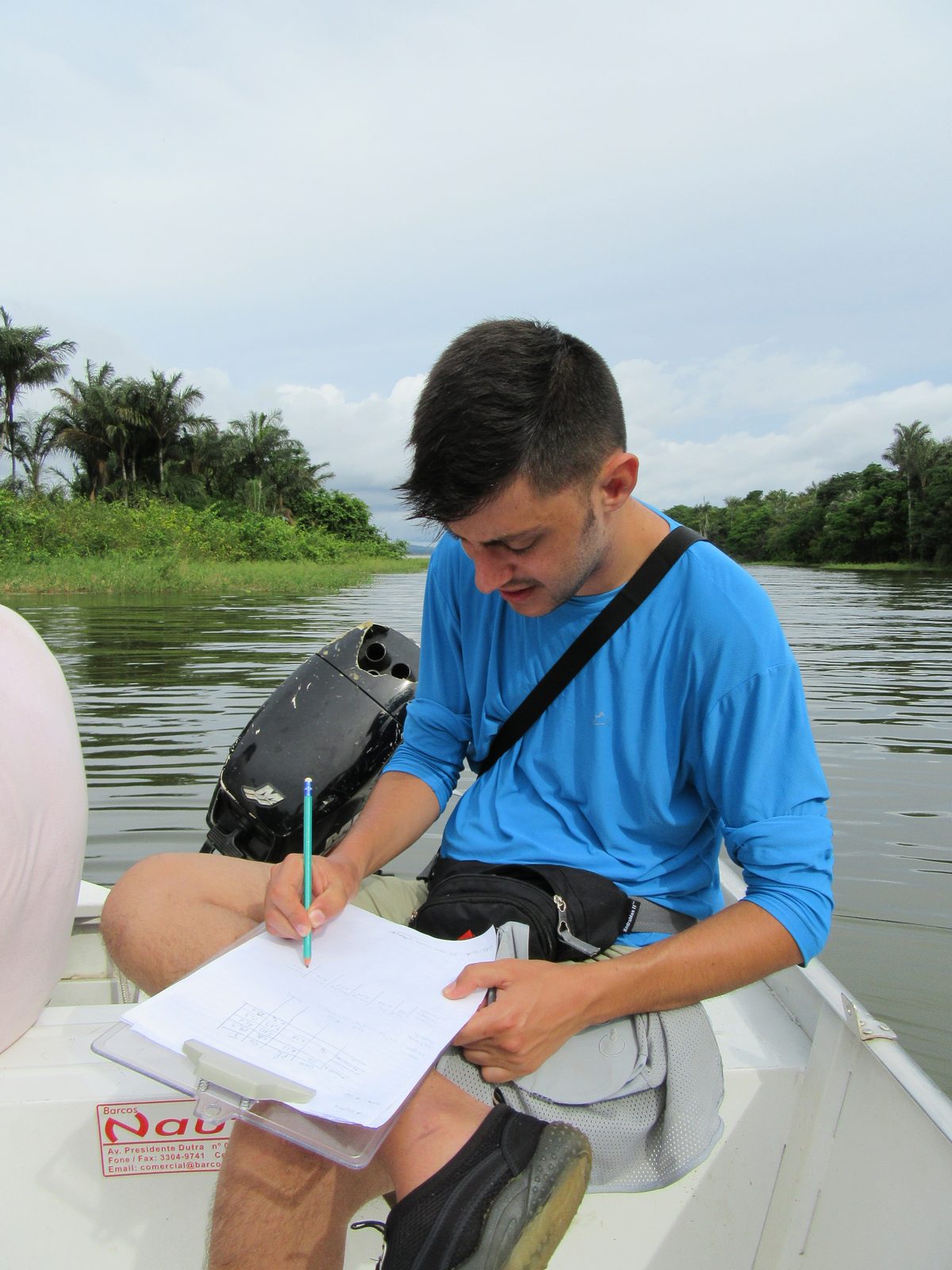
Photographs on this page are by Leonardo Capitani, except where credited otherwise.
Research paper associated:
Capitani, L., Angelini, R., Keppeler, F. W., Hallwass, G., & Silvano, R. A. M. (2021). Food web modeling indicates the potential impacts of increasing deforestation and fishing pressure in the Tapajós River, Brazilian Amazon. Regional Environmental Change, 21(2), 42. https://doi.org/10.1007/s10113-021-01777-z
My role
I was the principal investigator of this sub-project: I built and analysed the food-web models and led the writing of the resulting paper, as part of my M.Sc. dissertation.
Core collaborators
Renato A. M. Silvano 
- Master’s supervisor · research group leader, LEHPE
- 🏦 Federal University of Rio Grande do Sul (UFRGS), Brazil
- 🔗 Google Scholar
Ronaldo Angelini 
- Co-supervisor · food-web modeling
- 🏦 Federal University of Rio Grande do Norte (UFRN), Brazil
- 🔗 Google Scholar
Friends and colleagues in the expedition
- Junior Chuctaya — 🔗 Google Scholar
- Gustavo Hallwass — 🔗 Google Scholar
- Friedrich Wolfgang Keppeler — 🔗 Google Scholar
- Mariana Clauzet — 🔗 Google Scholar
- Pedro Peixoto Nitschke — Master in Ecology, UFRGS